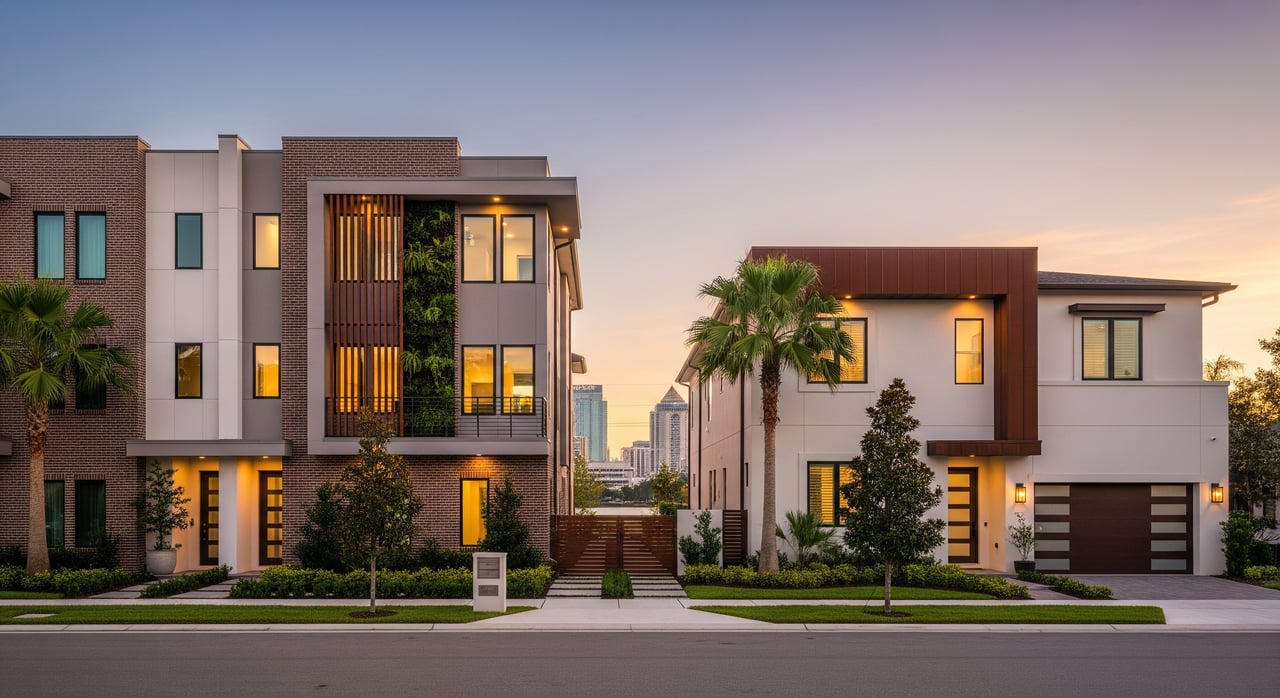
Thinking about buying near Lake Eola and the Church Street corridor but not sure if a townhome or a single-family home fits you best? You are not alone. Between HOA fees, insurance, taxes, and walkability, there is a lot to weigh beyond the list price. This guide breaks down real costs and lifestyle tradeoffs in Downtown Orlando so you can choose with confidence. Let’s dive in.
Quick snapshot: pros and tradeoffs
Townhome highlights
- Strong walkability near restaurants, parks, and employers.
- Exterior upkeep is often handled by the HOA, which saves time.
- Monthly HOA dues vary by services and amenities; special assessments are possible.
Single-family highlights
- More privacy, yard space, and storage options.
- Often higher direct maintenance and insurance costs.
- Single-family lots near downtown are scarcer, which can support land value.
Total cost of ownership
What to include
When you compare options, look past the mortgage. Add these line items for each property:
- Mortgage principal and interest
- Property taxes and any homestead exemption impact
- Homeowners insurance and, if required, flood insurance
- HOA dues and what they cover
- Utilities and trash service
- Parking permits or garage maintenance
- Routine maintenance and a reserve for major systems
Example monthly totals (illustrative)
These are planning examples for a typical downtown-area townhome vs a nearby small single-family home. Replace with your quotes and property details when you shop.
Townhome sample (purchase $420,000)
- 20% down payment: $84,000
- Mortgage P&I (30-year at 6.5%): about $2,114/month
- Property tax estimate at 1.1%: about $385/month
- Owner insurance share: about $100/month
- HOA dues: about $300/month
- Utilities: about $200/month
- Maintenance reserve at 1%/yr: about $350/month
- Approximate total: about $3,449/month
Single-family sample (purchase $480,000)
- 20% down payment: $96,000
- Mortgage P&I (30-year at 6.5%): about $2,417/month
- Property tax estimate at 1.1%: about $440/month
- Insurance: about $200/month
- HOA dues: $0
- Utilities: about $275/month
- Maintenance reserve at 2%/yr: about $800/month
- Approximate total: about $4,132/month
HOA fees explained
Townhome HOAs near the core often cover exterior maintenance, landscaping, trash, and sometimes roof and exterior insurance. Fees can range widely based on age, unit size, and amenities. Single-family homes may have no HOA, or a small one that covers shared areas only.
When you review HOA documents, focus on:
- What the master policy covers vs your personal policy
- Reserve fund health and any history of special assessments
- Deductibles for the master policy and how they are allocated
- Rental, pet, and parking rules
- Frequency and history of dues increases
Maintenance and repairs
A simple rule of thumb is 1% of home value per year for routine upkeep. For larger systems and exterior items, plan for 2% to 3% in older properties. Townhomes shift some exterior costs to the HOA, but you still need a reserve for interior systems and any HOA deductible you might owe. Single-family homes add lawn, tree, fence, and drainage care to your list.
Insurance and taxes in Orange County
In Florida, single-family homes usually carry an HO-3 policy. Townhomes can vary depending on how the association is structured, which can change whether you need an HO-6 or HO-3. Orlando’s inland location reduces storm surge risk compared to the coast, but wind and storm exposure still influence premiums. Flood insurance is required if the property sits in a mapped flood zone and you use a federally regulated lender.
Orange County property taxes are assessed locally, and the effective rate commonly falls near 1% of assessed value, though it varies by taxing district. Many primary residents can apply for a homestead exemption that reduces taxable value and may cap annual assessment increases. For planning, estimate 1.0% to 1.3% of price, then verify the exact figures for the specific address.
Walkability and transit
Townhomes close to Lake Eola, Thornton Park, and the Church Street corridor often score higher for walkability. You will find restaurants, events, and parks within a short walk. Single-family options in or just outside the core may require a short drive for errands.
For transit, the LYNX bus network and SunRail provide regional connections. Downtown also continues to add bike lanes and micro-mobility options. If walkability matters, compare daytime and nighttime noise levels and any event schedules nearby.
Parking and storage
Townhomes typically include one or two garage or driveway spaces, sometimes with guest parking limits. Single-family homes often add larger driveways, garages, and storage space. In the core, consider city parking rules for visitors and whether you may need permits or paid garage options for guests.
Resale and risk
Single-family properties near downtown can benefit from land scarcity, which may support appreciation over time. Townhomes and condos in strong, well-run associations with healthy reserves also see steady demand due to low maintenance and proximity to amenities. Attached product values can be more sensitive to HOA quality and new development supply, so review financials and keep an eye on the local construction pipeline.
Who each option fits
- You might prefer a townhome if you want low exterior maintenance, strong walkability, and proximity to downtown employers and nightlife.
- You might prefer a single-family home if you value a yard, extra storage, more privacy, and the control that comes with owning the entire structure and lot.
Build your side-by-side worksheet
Use this template to compare specific addresses. Replace blanks with your numbers from current quotes, county records, and HOA docs.
| Item | Townhome (monthly / annual) | Single-Family (monthly / annual) |
|---|---|---|
| Purchase price | ___ | ___ |
| Down payment | ___ | ___ |
| Mortgage P&I (monthly) | ___ | ___ |
| Property tax (annual/12) | ___ | ___ |
| Homeowners insurance (annual/12) | ___ | ___ |
| Flood insurance (if required) | ___ | ___ |
| HOA dues (monthly) | ___ | N/A or ___ |
| Utilities (monthly) | ___ | ___ |
| Trash/recycling (monthly) | ___ | ___ |
| Lawn/landscaping (monthly) | Included or ___ | ___ |
| Routine maintenance reserve | ___ | ___ |
| Major systems reserve | ___ | ___ |
| Parking/permit (monthly) | ___ | ___ |
| Total estimated monthly cost | ___ | ___ |
| Total estimated annual cost | ___ | ___ |
What to verify for each property
- HOA financials, reserve study, insurance declarations, and meeting minutes
- Master policy vs owner coverage and any special assessment history
- Roof, HVAC, electrical, and plumbing ages; inspection findings
- FEMA flood zone status and any flood quote if applicable
- Recent comps within 0.5 to 1 mile, adjusted for condition and lot
- City and HOA rules for rentals, pets, and parking
Next steps
If you want a walkable lifestyle near Lake Eola or prefer more space just outside the core, the right choice depends on your budget, maintenance tolerance, and day-to-day routine. Compare total ownership costs on a few real addresses, then tour them at different times of day to gauge noise, parking, and commute. When you are ready, tap local guidance to verify taxes, insurance, HOA strength, and resale outlook.
Have questions or want help building your side-by-side plan for Downtown Orlando? Reach out to the team at Orlando A to Z to get personalized guidance and on-the-ground insights.
FAQs
How do HOA fees for Downtown Orlando townhomes typically work?
- Fees often cover exterior maintenance, common landscaping, trash, and sometimes roof and exterior insurance, but amounts and coverage vary by community.
What should I budget for maintenance on a single-family home near downtown?
- A common rule is 1% to 2% of the home’s value per year for maintenance, with older homes trending toward the higher end to cover major systems.
How do Orange County property taxes compare between home types?
- Taxes are based on assessed value and local millage, not property type, so plan around 1.0% to 1.3% of value and confirm for the specific address.
Do townhomes or single-family homes have higher insurance in Orlando?
- Single-family homes often carry higher owner-paid premiums, while townhome owners may pay less individually if the HOA’s master policy covers exteriors.
Is flood insurance required in Downtown Orlando?
- Flood insurance is required if the property is in a mapped flood zone and you use a federally regulated lender; always check the flood map for the address.
How does walkability differ between townhomes and single-family near Lake Eola?
- Townhomes closer to the core tend to offer higher walkability to parks, dining, and employers, while many single-family options may require a short drive for errands.
